Sustainable UI Design

Standing on the ball of trash in space, Leela, Bender and Fry look at Earth. (Futurama S1E8)
Leela: Fry, what the hell were you people thinking back then? How could you just throw your garbage away?
Fry: Hey, hey, give me a break. What do you do with it?
Leela: We recycle everything. Robots are made from old beer cans.
Bender: Yeah, and this beer can is made out of old robots.
Leela: Nothing just gets thrown away
We segregate waste, buy second-hand items, and use electronic invoices and documents. While a paperless life may seem more eco-friendly, consider all the digital files stored in data centers worldwide, consuming energy to store our information.

Leela: What a filth.
Fry: It’s a glorious monument to the achievements of the 20th century.
Leela: Fry, this stuff was garbage when it was new.
According to the BBC, using the Internet accounts for 3.7% of global greenhouse gas emissions. A typical data center can use between 11 and 19 million liters of water per day. Every online activity—whether browsing, streaming, or even sending an email—contributes to carbon emissions due to the energy consumed by our devices and data centers. For instance, a single Google search generates about 0.2 grams of CO2, and when multiplied by billions of searches daily, the cumulative effect is significant.
What Can We Do to Change This?
Users should be able to find the content they need and perform the tasks they must accomplish in the easiest possible way. This is beneficial not only for your business but also reduces your website's carbon footprint by minimizing the number of unnecessary page visits and interactions. Ensure your products (whether websites or applications) are built to accessibility standards, optimized for performance, and designed mobile-first.
Learn more from IBM's sustainability design checklist here.
Calculate and Monitor Server Emissions
It's essential to analyze your website's resources to understand the amount of data being transferred. Every time a user visits your site, files are transmitted to their device, contributing to energy consumption.
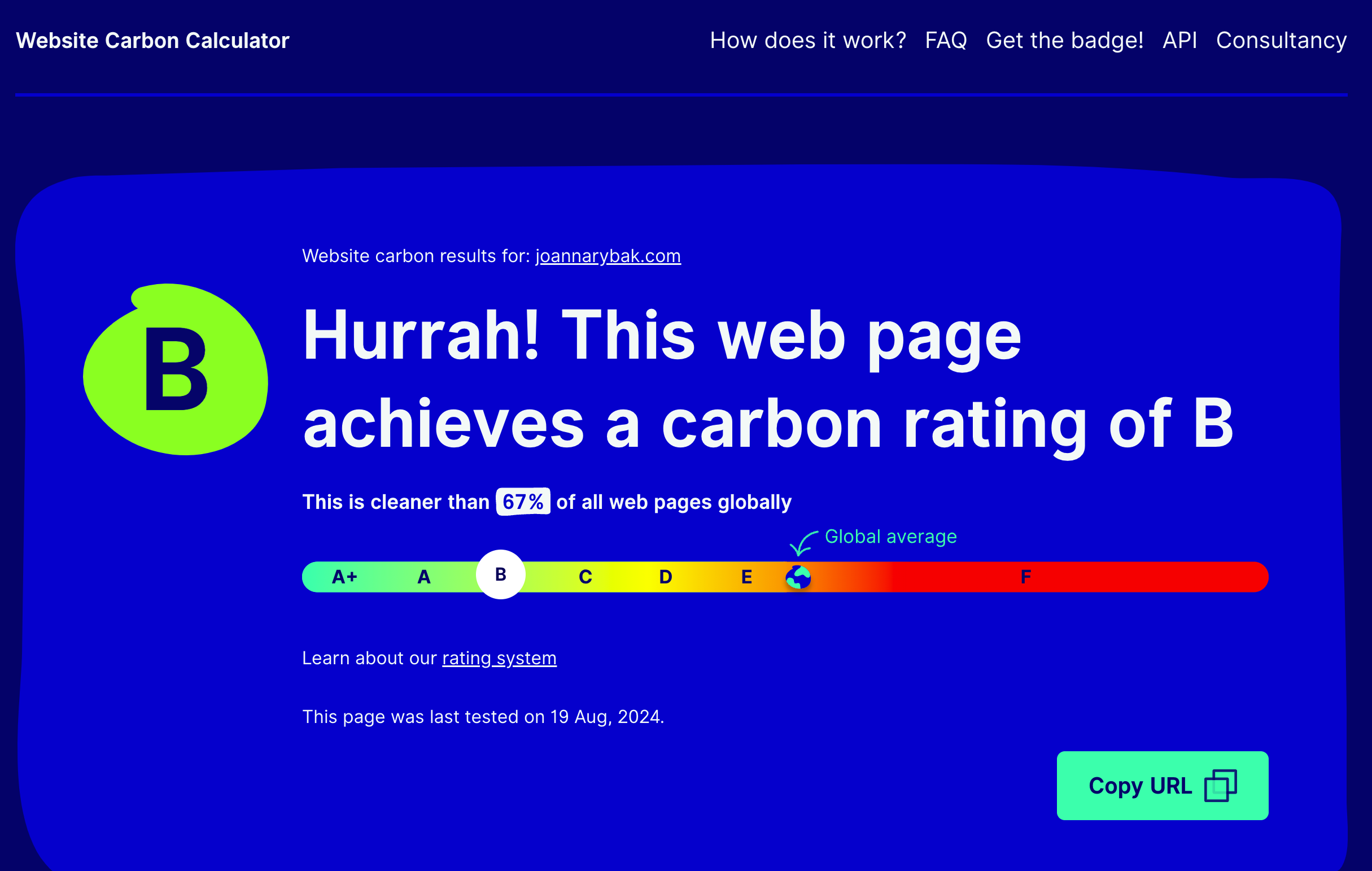
To check your website's CO2 emissions, use tools like Website Carbon Calculator and EcoGrader.
Optimize Media and Fonts
- Images: Compress images using tools like TinyPNG to reduce data load without sacrificing quality. Users won't notice a difference in quality but will likely appreciate faster page loading times.
- Videos: Avoid auto-playing videos—most users don't like this, and it increases data usage. Default quality should be HD/720p or lower, rather than Full HD or 4K.
- Fonts: Choose standard system fonts, popular fonts like those from Google Fonts, or if using custom fonts, select modern file formats like WOFF and WOFF2, which utilize more efficient compression methods compared to TTF or OTF.
Embrace Minimalist Design
Adopting minimalism by removing unnecessary elements can significantly reduce data load and energy consumption. A cleaner interface not only improves user focus but also reduces the digital footprint.
Optimize User Paths
Streamlining user interactions reduces unnecessary clicks and scrolling, which not only enhances usability but also conserves energy. Simplifying processes like completing purchases on e-commerce sites can decrease energy consumption per transaction.
Get information about your site's performance and recommendations with Google's PageSpeed Insights tool. You can also find useful resources at The Green Web Foundation

Mayor: Fry, we owe you a tremendous debt as well. Were it not for your 20th-century garbage-making skills, we’d all be buried under 20th-century garbage.
Leela: Should we really be celebrating? I mean, what if this second garbage ball returns to Earth like the first one did?
Fry: Well, who cares? That won’t be for hundreds of years.
Professor: Exactly. It’s none of our concern.
Conclusion
Sustainable UI design is more than just a trend; it is a necessary evolution in response to growing environmental concerns. By adopting practices that prioritize efficiency, simplicity, and ecological responsibility, designers can create digital experiences that are not only user-friendly but also beneficial for the planet, ultimately improving the quality of our lives.
Bento UI: The Art of Organization ↗
2024 · 6 min read